Travelling to Ivory Coast: a guide from people who live here
Visa, vaccinations, best time to go, safety and what to see, written in Abidjan.
Written in Abidjan by the Osmosis Akan Plus team, an inbound tour operator licensed since 2001. Updated October 2026.
Côte d’Ivoire, or Ivory Coast, is still one of the least known countries in West Africa. Few travellers make it here, and almost all of them ask the same questions before booking: which visa, which vaccinations, when to go, whether it is safe and what is worth seeing. This guide answers all of them, with what we see on the ground every week.
Why travel to Côte d’Ivoire
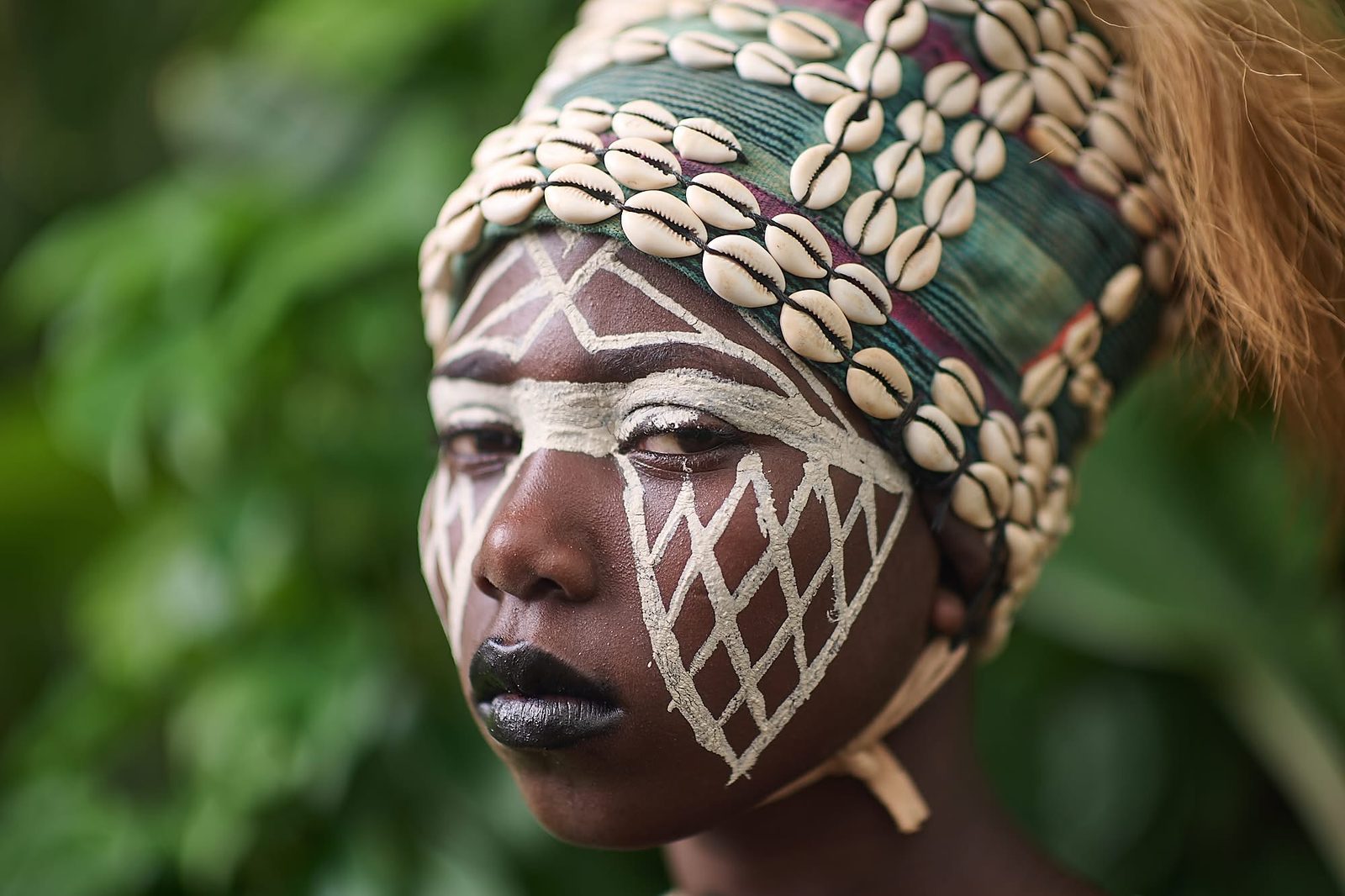
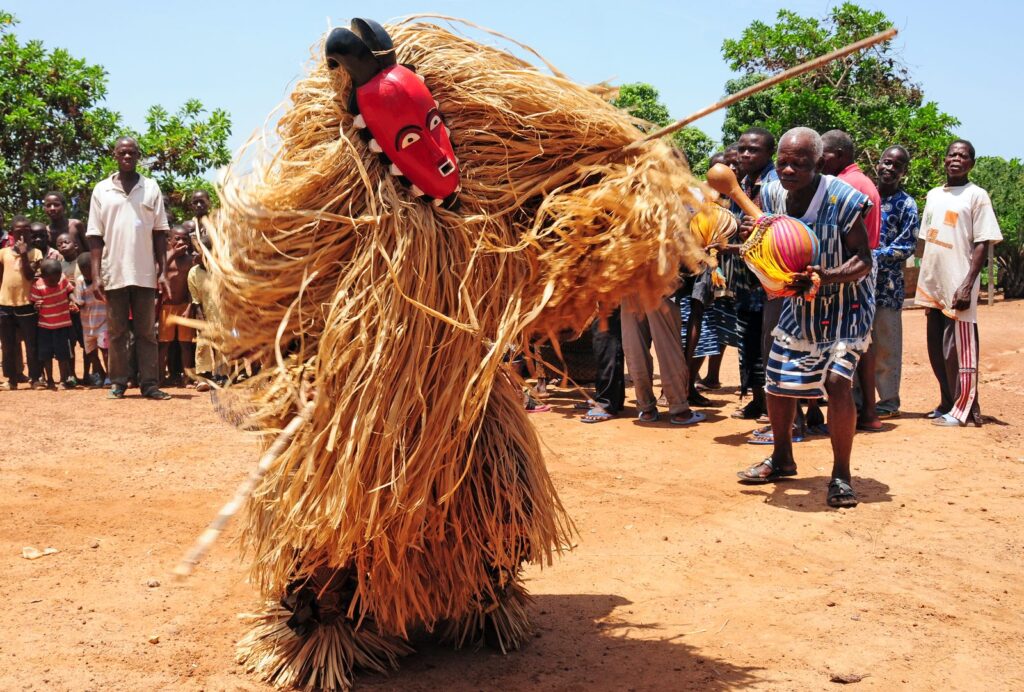
More than sixty peoples share this country, and many keep their traditions alive. Here masks are not behind museum glass: they come out to dance in the villages, before their chiefs and their initiates. The Komian priestesses of the east, the Goli of the Baoulé, the Zaouli of the Gouro (listed by UNESCO), the Boloye of the Senoufo and the stilt masks of the Dan country are part of everyday life.
Add to that the Akan royal courts, which receive visitors with their own protocol, the colonial town of Grand-Bassam, a World Heritage Site, the beaches and lagoons of Assinie, and a modern, energetic capital, Abidjan. All without crowds: in many villages you will be the only visitors of the day.
Visa and entry requirements
Most visitors need a visa to enter Côte d’Ivoire, including citizens of the United Kingdom, the United States, Canada, Australia and the European Union. No visa is required for holders of an ordinary or official passport from the following countries, according to the official e-visa website:
- ECOWAS member states: Benin, Burkina Faso, Cape Verde, The Gambia, Ghana, Guinea-Bissau, Liberia, Mali, Niger, Nigeria, Senegal, Sierra Leone and Togo.
- Other countries: Central African Republic, Chad, Mauritania, Morocco, the Philippines, the Republic of the Congo (Brazzaville), Rwanda, Seychelles, Singapore and Tunisia.
For a tourist stay of one to three months, the simplest option is the electronic visa (e-visa):
- Apply online on the official website snedai.com/e-visa, with your passport, a photo, your flight ticket and your accommodation booking, at least 10 working days before you travel.
- Pay the fee: €73 at the time of writing (October 2026). Beware of intermediary websites, which charge much more for the same procedure.
- Print the approved pre-enrolment certificate (pré-enrôlement approuvé). You must show it to the airline when you board and at Abidjan airport, where the visa is issued. Without it, you may be refused entry.
Other requirements:
- Passport valid for at least six months over the whole trip.
- Proof of accommodation for the whole stay. If you travel with us, we send it with your booking confirmation.
- Yellow fever vaccination certificate (see below).
You can also apply in person at an embassy of Côte d’Ivoire. Requirements sometimes change: always check the official information before you pay.
Vaccinations and health
- Yellow fever vaccination is compulsory. Your international vaccination certificate is checked on arrival at Abidjan airport: keep it in your hand luggage, with your passport.
- Recommended vaccinations: hepatitis A and B, typhoid, tetanus, meningitis, polio and diphtheria.
- Malaria: present throughout the country. Ask your doctor about prophylaxis, and use repellent and long sleeves from late afternoon.
- Water: drink only bottled water. There is always mineral water in our vehicles.
Book an appointment at a travel clinic several weeks ahead: some vaccines need time to take effect.
Best time to visit
The best season runs from August to April. That is when the roads are in the best condition and the festival calendar is richest. From May to July, the long rainy season makes some road journeys slower.
| Month | Festival or event | Where |
|---|---|---|
| October | Abissa, the great festival of the N’zima, with the king on his golden throne | Grand-Bassam |
| December | Man Mask Festival (Nihidaley) | Man, Dan country |
| December | Yam festival | Moronou: Arrah, Abongoua, Akakro… |
| April | Popo Carnival | Bonoua |

Travelling outside these dates? No problem: mask ceremonies take place all year round (we explain why below).
Is it safe to travel to Côte d’Ivoire?
Yes. Côte d’Ivoire is today a stable and safe country for travellers, and our clients’ safety is the first thing we consider when we design an itinerary.
Two neighbouring countries to the north, Burkina Faso and Mali, face jihadist violence. For this reason, foreign ministries advise against the far-northern border strip (the north of the Zanzan, Savanes and Denguélé regions, and Comoé National Park). All the places we visit are safe.
Our usual advice, as in any big city: keep valuables out of sight, use app taxis at night and follow your guide’s lead in the villages. Before you travel, read your government’s travel advice, for example the UK Foreign Office or the US State Department.
What to see in Côte d’Ivoire, region by region
Abidjan and Grand-Bassam
Abidjan is the gateway and the economic capital: the towers of the Plateau, St Paul’s Cathedral, the markets of Treichville and the Banco forest, a national park inside the city. The Museum of Civilisations is closed for the time being and should reopen soon.
Half an hour from the airport, Grand-Bassam, the first colonial capital, keeps its period houses facing the sea and is a UNESCO World Heritage Site.
Yamoussoukro and the Baoulé country
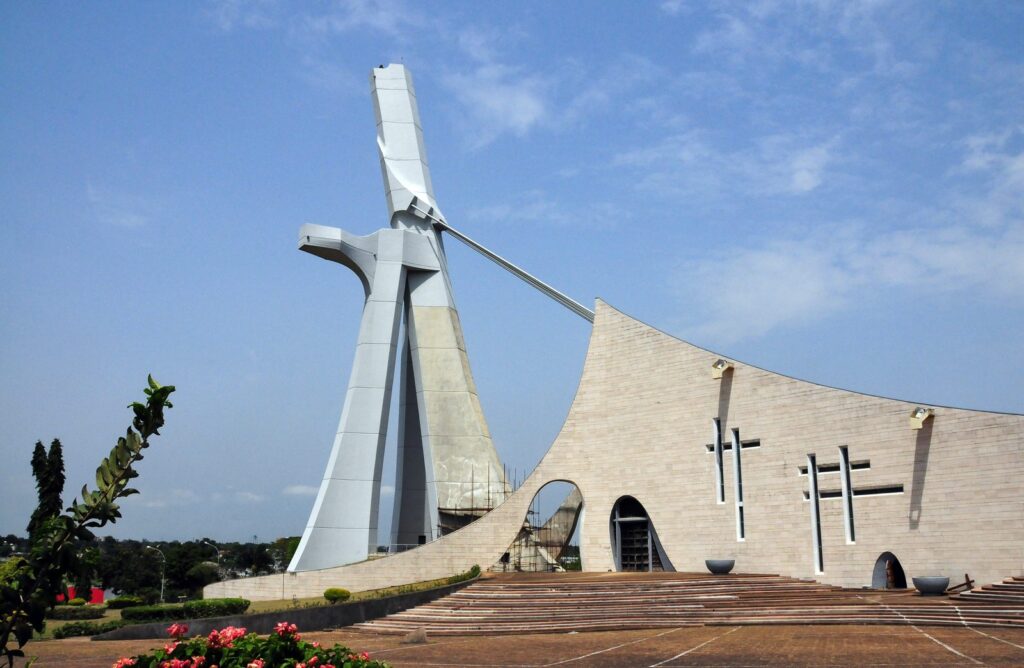
The political capital surprises with the Basilica of Our Lady of Peace, one of the largest churches in the world, consecrated by John Paul II in 1990. At sunset, the sacred crocodiles of the presidential lake.
All around lies the Baoulé country: the great Goli mask danced at the royal court of Kondeyaokro, its weavers, and the potters of Mangoro, who shape their pots without a wheel. In Bouaflé, the Zaouli, the Gouro mask dance listed by UNESCO.
The Akan east: kingdoms and priestesses
In the Indénié kingdom, the school of the Komian priestesses in Aniassué and the royal court of Abengourou, with its museum of royal regalia. In Bongouanou, the sacred lake of Sôkôtê.
This is the heart of our Spirit Trails and The Akan Kingdoms itineraries.

The Senoufo north: Korhogo and its villages
Korhogo is the capital of the Senoufo country. Around it: the weavers of Waraniéné and their painted cloths, the shea butter cooperatives, the fetish house of Niofoin, the Boloye, the panther dance of the Poro initiates, and the fire eaters of the djinagoro.
Further west, in Boundiali, the dozo, the brotherhood of traditional hunters.
The west: Man and the Dan country
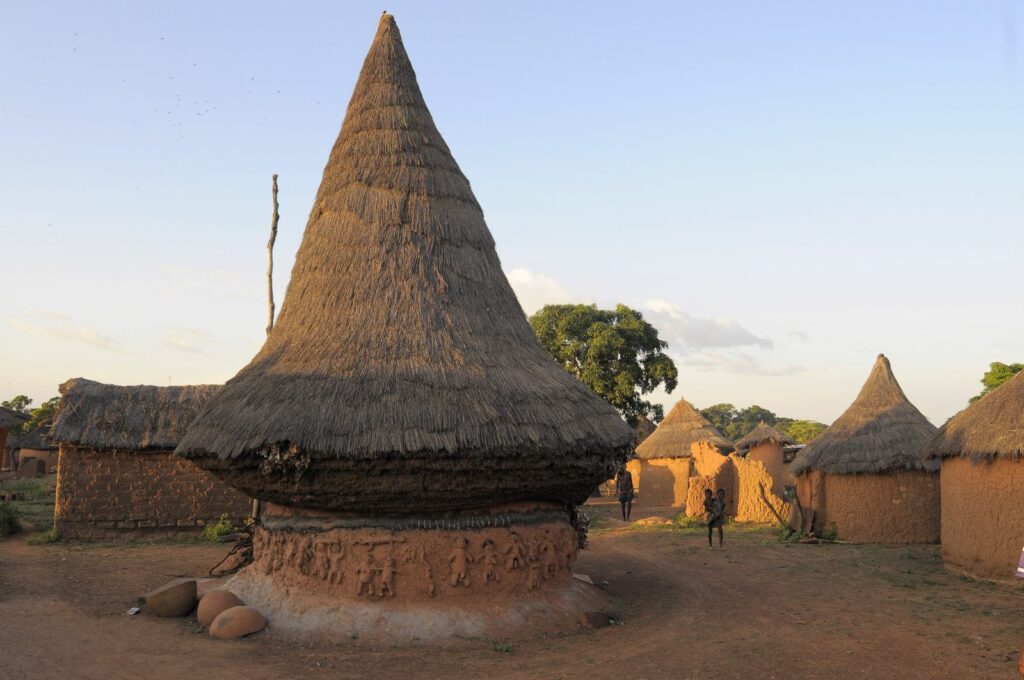
Between mountains and forest, Man is the capital of the Yacouba Dan country. It is the land of masks, among them the guegbin, which dances on stilts several metres above the ground.
In December, the mask festival brings together the villages of the whole region.
Assinie and the eastern lagoons
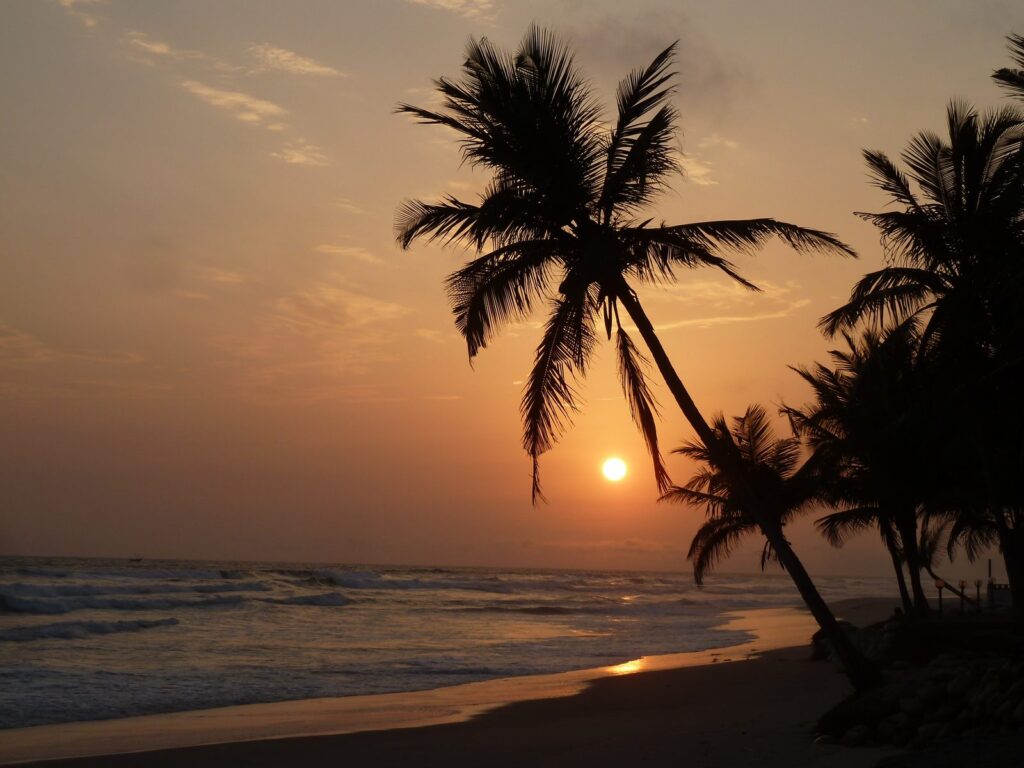
White sand beaches between the ocean and the lagoon, a couple of hours from Abidjan: the perfect place to end your journey.
From there you can visit the Éhotilé Islands, a national park in the Aby lagoon, and the court of the Sanwi kingdom in Krindjabo.
And Taï National Park?
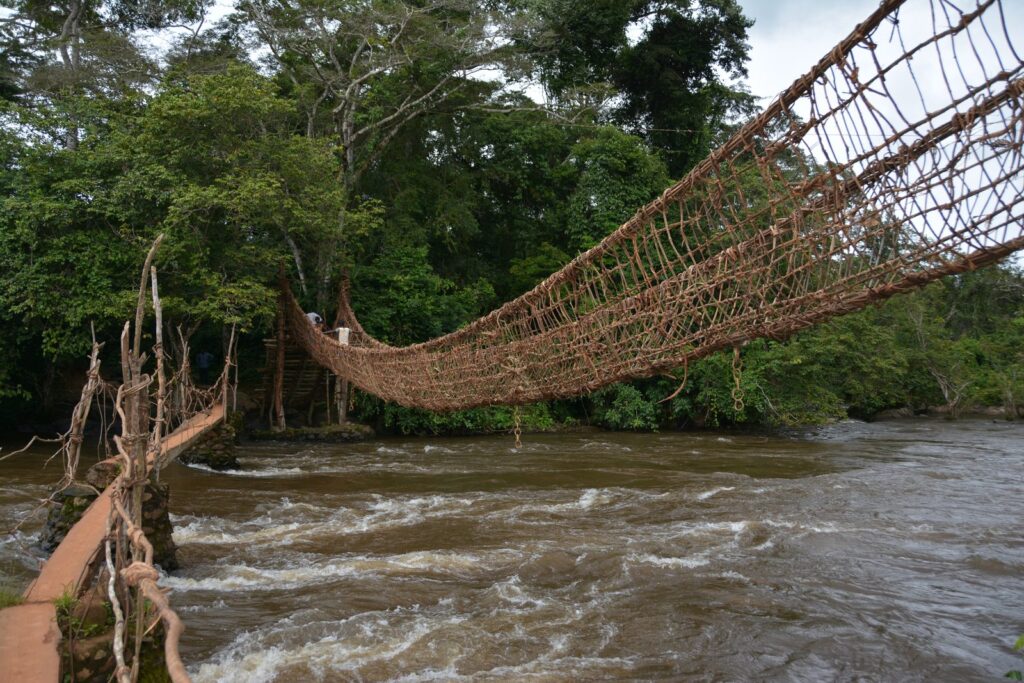
One of the last great primary rainforests of West Africa, listed by UNESCO, home to wild chimpanzees. The road is in very poor condition, so we reach it by 4×4 and stay two nights at the Ecotel Touraco. Taï is part of our Mountains, Nature and Wildlife itinerary, from mid-November to the end of April.
And beyond Côte d’Ivoire
From Abidjan we also run journeys through Ghana (Kumasi, Cape Coast, Elmina), Togo, Benin and Liberia. All our routes are on the itineraries page.
Mask ceremonies: what you need to know
This is what makes a journey to Côte d’Ivoire unique, and what raises the most questions.
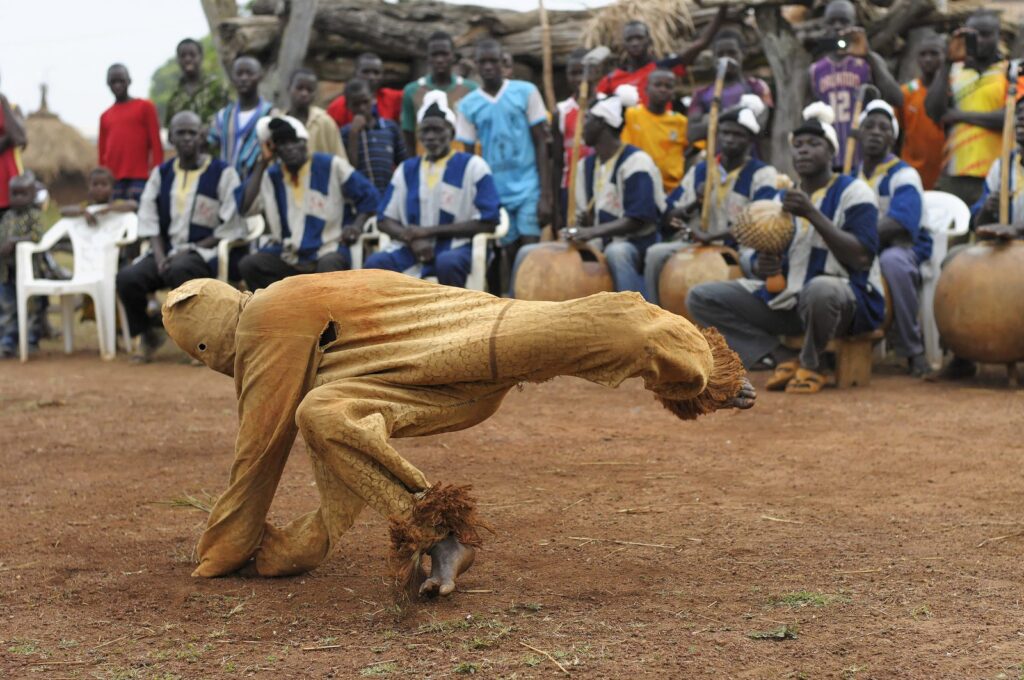
- They are not shows for tourists. They are living ceremonies, arranged in advance with the chiefs, the priests and the families of initiates we know personally. Our guide takes care of the protocol, the greetings and the offerings.
- They take place every day of the week, Sundays included. The only exception is the death of an initiate: the dance cannot then come out, and we arrange it in a neighbouring village of the same tradition. Your programme does not lose the ceremony.
- Photos are free. No village charges for photography. What you always do is ask permission, and your guide will tell you at each moment what may be photographed and what may not. Some sacred places, such as certain forests, are open only to initiates.
- Respect is everything: greet the chief first, never touch the masks, and follow the rhythm of the village.
Budget and money
- Currency: the CFA franc (XOF), pegged to the euro: €1 = 655.957 CFA francs. It comes from the old fixed rate with the French franc, 1 French franc for 100 CFA francs, carried over unchanged to the euro. Easy mental maths: 10,000 F is about €15.
- Notes and coins: notes of 500, 1,000, 2,000, 5,000 and 10,000 CFA francs; coins of 10, 25, 50, 100, 200, 250 and 500. Carry small notes for taxis, markets and tips: change for a 10,000 note is not always easy to find.
- Cards: the vast majority of hotels (around 90%) accept credit cards. In markets, maquis and villages, cash only. There are ATMs in Abidjan and the main towns.
- Mobile payment: paying with Orange Money and Wave is now common across the country and replaces cash even in small roadside shops. You need an Ivorian SIM card, easy to get in Abidjan; with it and the app, you can pay almost anywhere.
- Eating out: in the maquis, the popular restaurants, you eat well from 5,000 CFA francs (about €8). In hotel and city restaurants, from 10,000 CFA francs (about €15).
- Getting around Abidjan: the Yango, Uber and InDrive apps work and charge by distance. A taxi ride starts at 3,000 CFA francs, and the shared neighbourhood taxi (woro-woro) at 300 CFA francs.
- Entrance fees: the basilica in Yamoussoukro costs 5,000 CFA francs per person for foreign visitors; the sacred crocodiles are free.
Getting there and getting around
- Getting there: Félix Houphouët-Boigny International Airport in Abidjan has flights from Europe and across Africa. From Paris, Air Côte d’Ivoire and Air France fly direct; other usual connections are Casablanca (Royal Air Maroc), Brussels (Brussels Airlines) and Istanbul (Turkish Airlines). From the UK and North America, most travellers connect through one of these hubs. Within West Africa, Air Côte d’Ivoire links Abidjan with Accra, Lagos, Dakar and other capitals, and from Ghana you can also come by road through the Elubo–Noé border.
- By road: the usual way to travel around the country. Distances are long and so are the stages: about three hours from Abidjan to Yamoussoukro; some 400 km from Yamoussoukro to Korhogo through the Baoulé country; another 330 km from Korhogo to Odienné. That is why we always travel in an air-conditioned vehicle, with a driver and a guide.
- By air: Air Côte d’Ivoire connects Abidjan with the main towns of the interior: Bouaké, Korhogo, Man, Odienné and San Pedro. A domestic flight saves a day on the road on longer journeys.
Travelling with a local agency
You can travel independently in Côte d’Ivoire. But to attend ceremonies, enter the royal courts or reach the villages of the interior, you need to know the people and their protocol.
Osmosis Akan Plus is an inbound tour operator based in Abidjan, holding a category A operating licence since 2001. Our guides are our own, speak English, French, Spanish and German, and have spent nearly thirty years travelling the country. We arrange every ceremony with the chiefs and the initiates, and we look after you from landing to your flight home.
Our terms and conditions explain transport, guides, payment and cancellations. For any question, write to us or call us. Travel agencies: see our Travel Trade page.
Request a quoteFrequently asked questions
Do I need a visa to travel to Côte d’Ivoire?
Most visitors do, including UK, US, Canadian and EU citizens. Citizens of most ECOWAS countries (Ghana, Nigeria, Senegal, Togo…) and of a few other countries do not: the full list is on the official e-visa website. For tourist stays of up to three months, apply online for the e-visa on snedai.com. The visa is issued on arrival at Abidjan airport on presentation of the approved pre-enrolment certificate.
How much does the Ivory Coast visa cost?
The e-visa costs €73 (October 2026). Intermediary websites charge more for the same procedure.
Is the yellow fever vaccination compulsory?
Yes, and the vaccination certificate is checked on arrival at Abidjan airport. Hepatitis A and B, typhoid, tetanus, meningitis, polio and diphtheria vaccinations are also recommended.
When is the best time to visit Côte d’Ivoire?
From August to April. From May to July it rains more and some roads become slow.
Is it safe to travel to Côte d’Ivoire?
Yes. The country is stable. Foreign ministries advise against the far-northern border strip, next to Burkina Faso and Mali. Our itineraries do not go there.
How many days do I need to see Côte d’Ivoire?
Five days are enough for Abidjan, Grand-Bassam and Yamoussoukro. To reach the Senoufo north and the Dan west, allow ten to fourteen days.
Can I take photos at the ceremonies?
Yes, and no village charges for it. Always ask permission first, and some sacred places are not photographed.
Can I pay by card?
In almost all hotels, yes. In markets, maquis and villages, you pay in cash in CFA francs or by phone with Orange Money or Wave, widely used across the country (you need an Ivorian SIM card).