Tribes and Cultures of Côte d’Ivoire
Eleven days from village to village, from the Akan of the east to the Senoufo, Fulani and Dan of the north and west, and down to the fishermen of the coast.
Overview
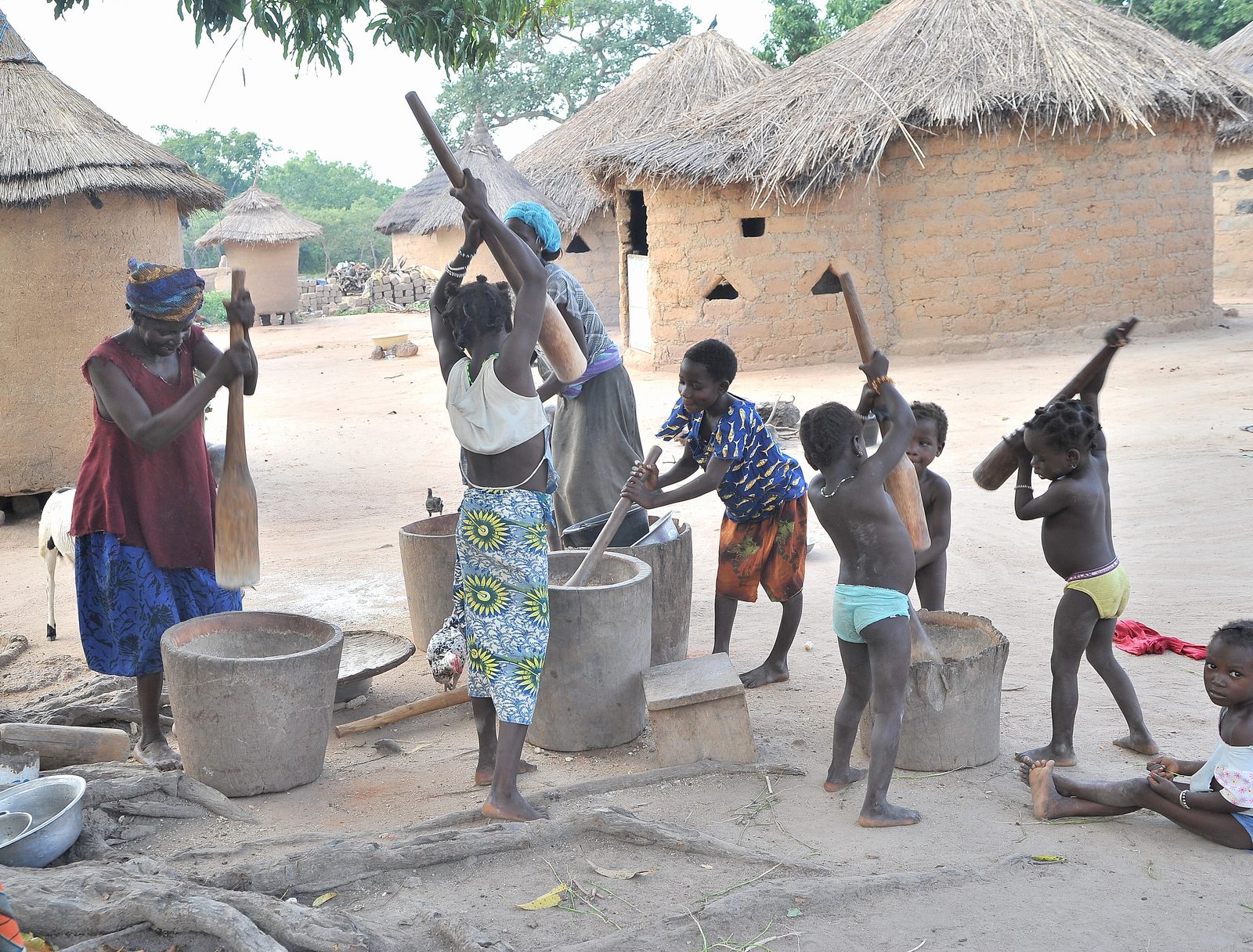
Côte d’Ivoire is home to more than sixty peoples, each with its own language, its own masks and its own way of ordering life. This journey goes right round the country to meet several of them on their own ground, in the villages, far from the cities.
We begin in the east, in Agni country, with the Komian priestesses and a cocoa king. We head north to Senoufo country, land of sacred groves and the painted cloths of Korhogo, then west among the Fulani camps and the mountains of the Dan, where masks dance on stilts. We then come down to the coast through cocoa country, to finish with the Kroumen fishermen of Grand-Béréby, the old town of Lahou-Kpanda and the beach at Grand-Bassam.
Eleven days on the ground, arriving in and departing from Abidjan.
Highlights
- The Komian of AniassuéThe school of the Agni priestesses and their possession dance.
- Senoufo countryThe painters of Fakaha, the weavers of Waraniéné, the sacred rock of Shienlow and the Boloye dance of the panther men.
- The Fulani of BoundialiA visit to the camps of the nomadic herders of the north.
- The Dan masksThe Guegbin on stilts in Silakoro and the Gba dance in Blolé.
- The west coastThe harbour of the Kroumen fishermen of Grand-Béréby, a coast few travellers know.
- Grand-BassamThe first colonial capital, a UNESCO World Heritage site, to finish by the sea.
Itinerary
The Komian of Aniassué and the king of Niablé
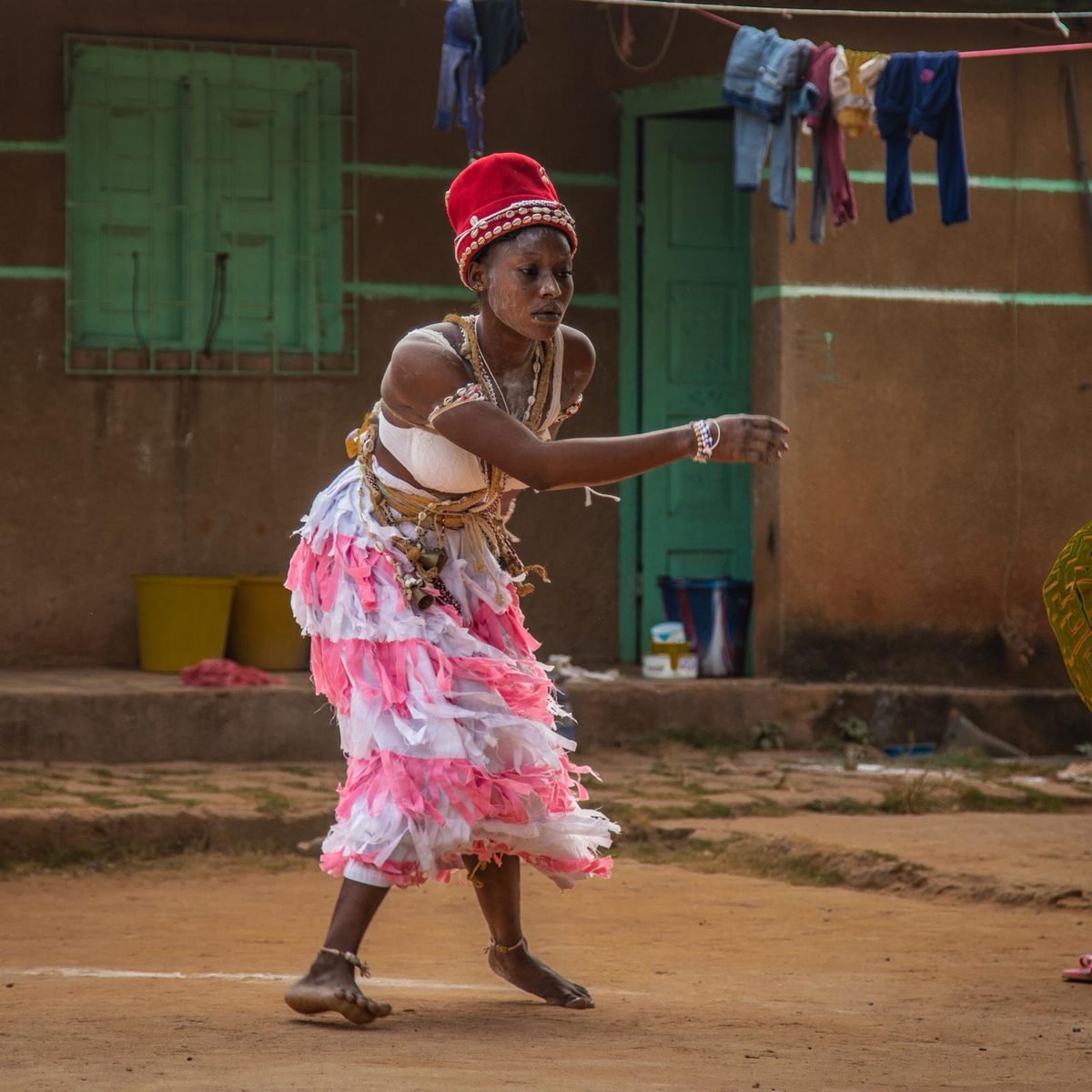
Arrival in Abidjan, meet and greet at the airport and departure east to the Indénié kingdom, in Agni country, through forest and plantations. In Aniassué we visit the school of the Komian, the traditional priestesses, who perform their dance for us.
On to Abengourou, a great cocoa and coffee centre. In the afternoon we go to Niablé, near the Ghanaian border, among the cocoa fields, to call on its king.
Night in Abengourou, Hôtel Le Royaume or similar · Breakfast
Yamoussoukro, the basilica and the sacred crocodiles
On to Yamoussoukro, the country’s political capital. A visit to the Basilica of Our Lady of Peace, one of the largest churches in the world, consecrated by Pope John Paul II in 1990, and to the great mosque. At sunset, the sacred crocodiles of the presidential lake.
Night in Yamoussoukro, Hôtel Président or similar · Breakfast
To Senoufo country
North through Bouaké, with a stop in Katiola to meet the Mangoro potters, who shape their pots by hand, without a wheel, as their grandmothers did. Arrival in Korhogo, capital of the Senoufo, in the afternoon.
Night in Korhogo, Iris Mont Korhogo or similar · Breakfast
Korhogo and the Senoufo
Among the Senoufo, the community matters more than the individual. Society is organised by lineages and crafts, blacksmiths, farmers, carvers, weavers, and the sacred groves around the villages serve as both school and place of worship.
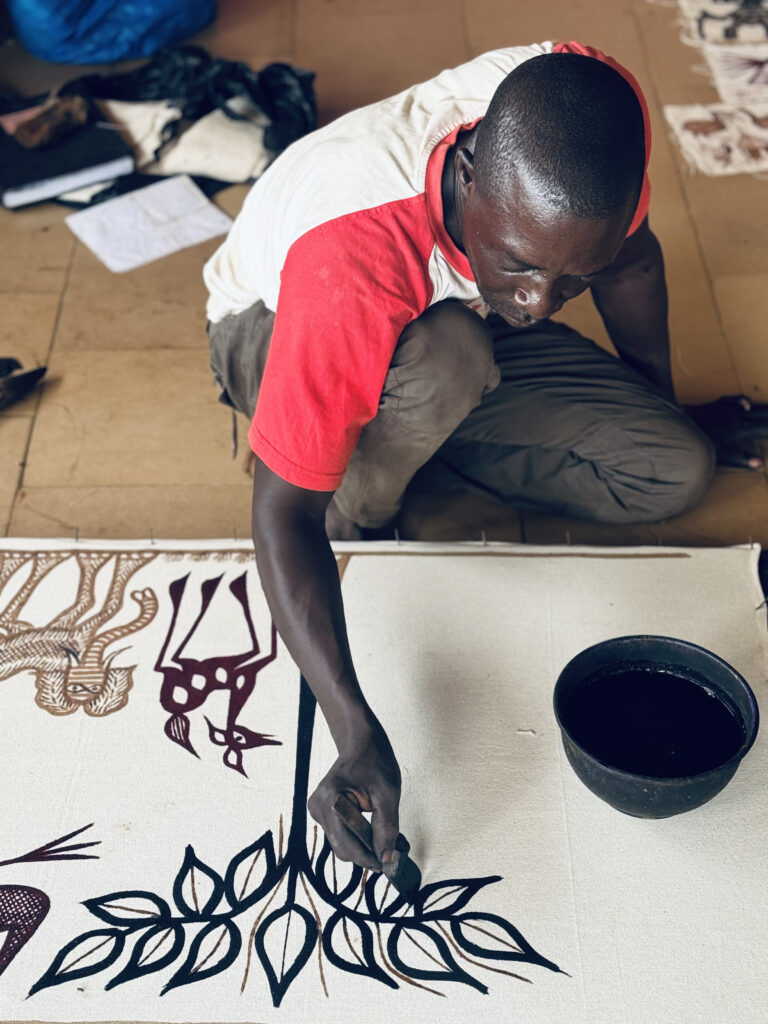
We visit Fakaha, the village of the painters of the famous Korhogo cloths, and Waraniéné, the village of the weavers. In the afternoon, the sacred rock of Shienlow and, to end the day, the Boloye of the panther men, an initiation dance.
Night in Korhogo, Iris Mont Korhogo or similar · Breakfast
The Fulani camps
North-west. Near Boundiali we visit a camp of the Fulani, the nomadic herders who cross the savannah with their cattle, then the village of Dienguélé. Arrival in Odienné, in Malinké country, in the afternoon.
Night in Odienné, Hôtel Les Frontières or similar · Breakfast
Silakoro and the stilt mask
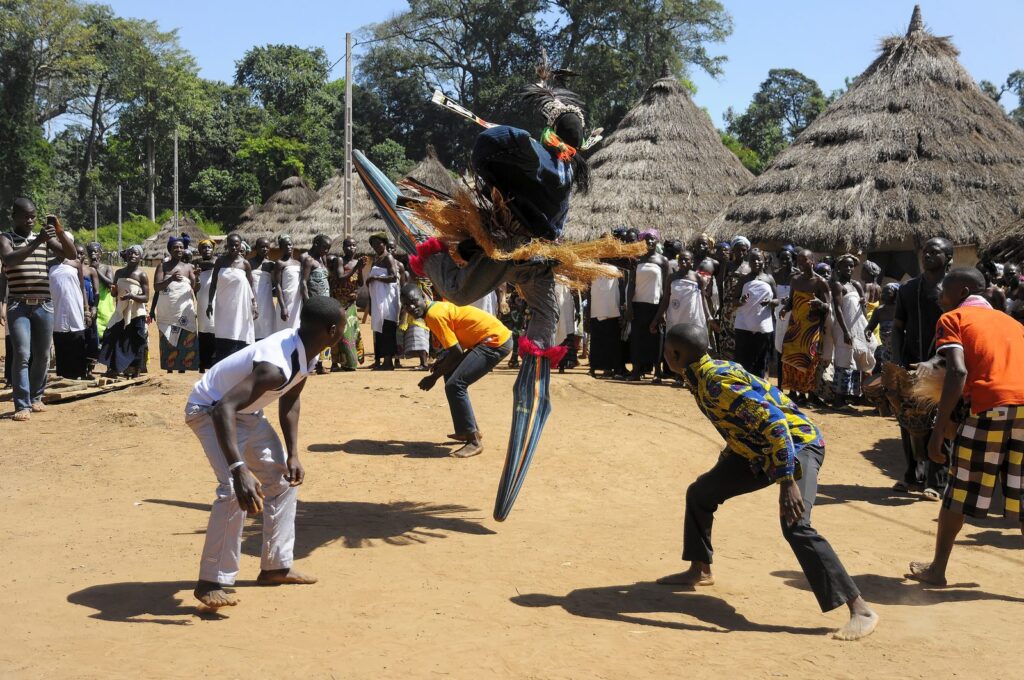
West towards the mountains. On the way we meet the blacksmiths of a village in the region and reach Silakoro, a village of mud houses and thatched roofs deep in the forest, with its sacred fish. There we watch the Guegbin, the mask that dances on stilts several metres high.
Arrival in Man, the town of the eighteen mountains, and a visit to its waterfall.
Night in Man, Hôtel Beau Séjour or similar · Breakfast
Blolé and the Gba dance
In the morning we go to Blolé, a Yacouba village, for the Gba dance. In the afternoon we explore Man: the peanut roasters and the Malinké blacksmiths, who work with recycled materials.
Night in Man, Hôtel Beau Séjour or similar · Breakfast
From the mountains to the ocean
A long day on the road south. We leave the western mountains and cross cocoa country, the nation’s first export, through Duékoué and Soubré to San Pedro, the great cocoa port. Arrival in Grand-Béréby in the late afternoon and check-in by the beach.
Night in Grand-Béréby, Hôtel La Flotte or similar · Breakfast
The Kroumen of Grand-Béréby and Lahou-Kpanda
In the morning, the fishing harbour and the camp of the Kroumen, a people of fishermen and seafarers of the west coast. Then east along the coast to Grand-Lahou, land of the Avikam.
In the afternoon we cross the lagoon by canoe to Lahou-Kpanda, the old town, built on the strip of sand between the lagoon and the ocean. It was a busy trading post in colonial times, and today the sea is slowly claiming it.
Night in Grand-Lahou, Hôtel Les Ravins or similar · Breakfast
Grand-Bassam, the first capital
On to Grand-Bassam, the country’s first colonial capital. A walk through the colonial quarter, a UNESCO World Heritage site, with its merchants’ houses, and a visit to the National Costume Museum. Free afternoon on the beach.
Night in Grand-Bassam, La Madrague or similar · Breakfast
Grand-Bassam and departure
Free time in town or on the beach. At the agreed time, transfer to Abidjan airport, half an hour away.
Breakfast · End of our services
What’s included
- English-speaking guide from start to finish
- Air-conditioned vehicle with driver, and all road transfers
- 10 hotel nights in a double room
- Breakfasts
- Komian, Boloye, Guegbin and Gba dances
- Visit to the king of Niablé with his traditional protocol
- Canoe crossing to Lahou-Kpanda
- Local guides in Senoufo country and in Man
- Visits and entrance fees as listed, mineral water in the vehicle
Not included
- International flights
- Ivorian visa and yellow fever vaccination, which is compulsory
- Travel and repatriation insurance
- Lunches and dinners, drinks
- Tips and personal expenses
Accommodation
| Stop | Hotel, or similar | Nights |
|---|---|---|
| Abengourou | Hôtel Le Royaume | 1 |
| Yamoussoukro | Hôtel Président | 1 |
| Korhogo | Iris Mont Korhogo | 2 |
| Odienné | Hôtel Les Frontières | 1 |
| Man | Hôtel Beau Séjour | 2 |
| Grand-Béréby | Hôtel La Flotte | 1 |
| Grand-Lahou | Hôtel Les Ravins | 1 |
| Grand-Bassam | La Madrague | 1 |
Good to know
Dances and ceremonies. They take place in the villages, with the people who live there, and are not shows put on for tourism. If a village event prevents a dance on the planned day, we see it in a neighbouring village of the same tradition.
Photography. No village charges for photos, but always ask before photographing people or a ceremony. Your guide will tell you when it is possible.
The roads. The tour goes right round the country: several stages take more than five hours, and day 8, from Man to the coast, takes most of the day. We stop regularly and the pace adapts to the group.
Meals. The price includes breakfast. For lunch and dinner, your guide suggests local restaurants at each stop. If you prefer half board, we will quote it for you.